Goat Milk vs Cow Milk:
The Complete Digestive & Nutritional Verdict
Karachi, Pakistan • 9 Minute Read
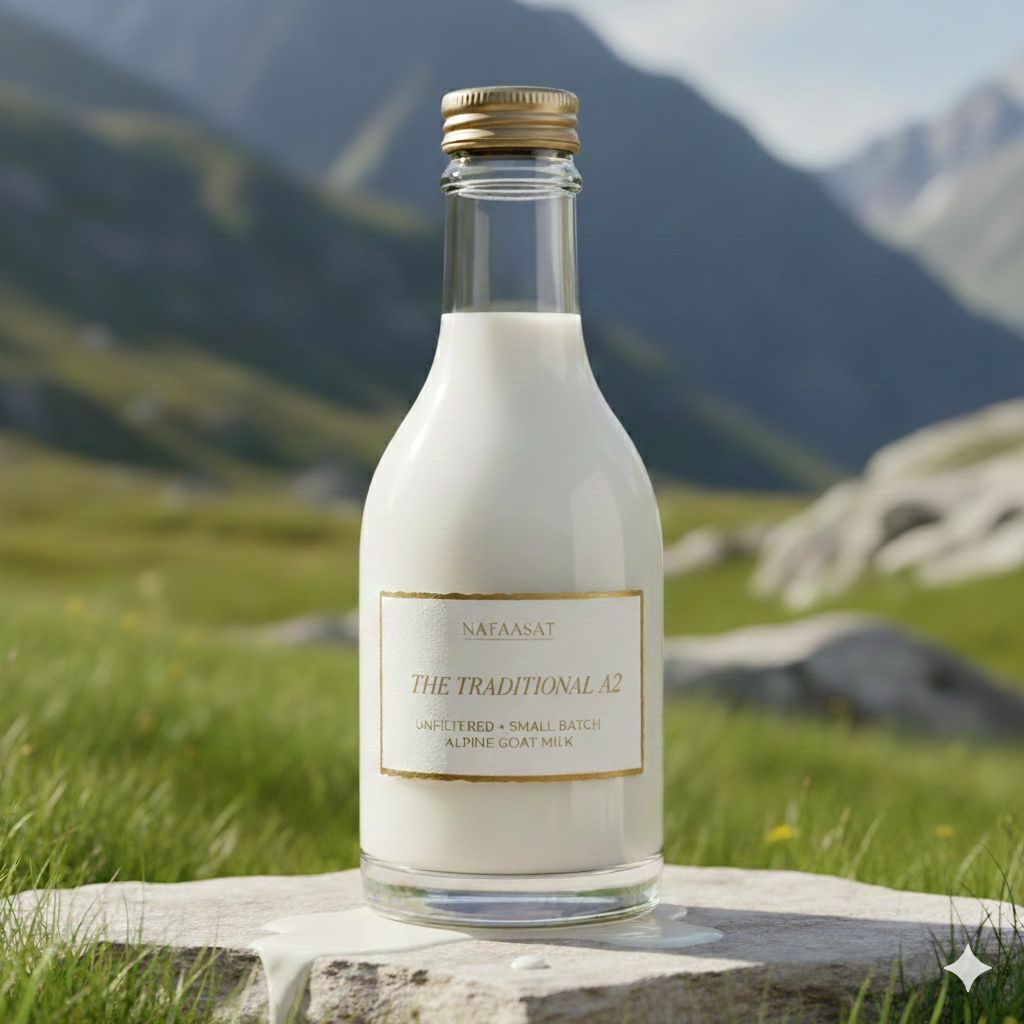
Milk is one of humanity’s oldest foods—and paradoxically, one of its most misunderstood. In Karachi’s rapidly evolving wellness culture, consumers are no longer asking whether milk is healthy. They are asking a more precise question: which milk is biologically compatible with the modern human body? The answer lies in a careful comparison of goat milk versus cow milk.
Milk Is Not a Single Substance
From a biochemical perspective, milk is not a uniform product. It is a complex suspension of proteins, fats, sugars, enzymes, and minerals—each interacting with the digestive system in different ways. Two milks may look identical in a glass, yet behave radically differently once consumed.
This distinction explains why cow milk, despite its popularity, is one of the most common triggers of bloating, sinus congestion, acne, and digestive heaviness. Goat milk, long consumed in Mediterranean and Middle Eastern cultures, follows a different biological blueprint.
The Protein Question: A1 vs A2
Protein is the decisive variable. Most commercial cow milk contains A1 beta-casein, a protein that breaks down during digestion into a peptide known as BCM-7. This compound has been associated with intestinal inflammation, slowed gut motility, and immune responses in sensitive individuals.
Goat milk contains exclusively A2 beta-casein—the ancestral form of dairy protein. When digested, A2 does not produce BCM-7. Instead, it breaks down cleanly into amino acids the body recognizes and absorbs without resistance.
This single difference explains why many individuals who believe they are “lactose intolerant” discover that they can consume goat milk comfortably.
Digestive Architecture: How Milk Behaves in the Stomach
01 · Curd Density
Cow milk forms a dense, rubbery curd in the stomach. This slows digestion and increases fermentation, often resulting in gas, pressure, and discomfort. Goat milk forms a soft, fragile curd that breaks apart rapidly under enzymatic action.
02 · Fat Globule Physics
Goat milk fat globules are naturally smaller and evenly dispersed. This “natural homogenization” allows digestive enzymes to access fats quickly, reducing the workload on the pancreas and gallbladder.
03 · Transit Time
Studies show goat milk passes through the stomach and intestines faster than cow milk, minimizing bacterial fermentation and post-dairy fatigue.
Lactose: A Secondary Issue
Lactose is often blamed for dairy intolerance, yet it is rarely the primary culprit. Goat milk contains slightly less lactose than cow milk, but its real advantage lies in speed. Faster digestion means lactose spends less time fermenting in the gut.
For many Karachi households, this translates into a simple realization: discomfort once attributed to lactose was actually a reaction to protein-induced inflammation.
Micronutrients & Absorption Efficiency
Both goat and cow milk contain calcium, phosphorus, potassium, and magnesium. However, absorption—not quantity—defines nutritional value. Goat milk minerals are more bioavailable due to lower inflammatory interference during digestion.
Goat milk is also richer in pre-formed vitamin A, supporting immune function, skin health, and vision without requiring enzymatic conversion.
Inflammation, Skin & Respiratory Health
One of the most overlooked effects of cow milk is its link to low-grade systemic inflammation. This manifests as acne, eczema, sinus congestion, and chronic mucus production. Goat milk’s A2 protein and faster digestion significantly reduce these reactions.
This is why pediatric nutritionists and functional health practitioners increasingly recommend goat milk for children, recovering patients, and individuals with sensitive immune systems.
The Environmental & Ethical Dimension
Beyond human health, goats require less land, water, and feed than cattle. They adapt naturally to varied climates and forage patterns, making goat milk a more sustainable and ethical dairy choice—particularly relevant in regions like Sindh.
The Final Verdict
Cow milk remains nutritionally adequate for some. But for individuals seeking optimal digestion, reduced inflammation, clearer skin, and nutrient efficiency, goat milk represents a decisive evolutionary refinement.
At Nafaasat, we do not position goat milk as an alternative. We present it as a return—to biological compatibility, ancestral wisdom, and uncompromised purity.
Estate Harvest • Fast Cold-Chain Delivery Karachi